Every start-up begins with an innovative idea. But filling the gap between an idea and the final product that users actually pay for is where most start-ups struggle. If you are developing a software product and you are based in Silicon Valley, the decisions you make as a start-up in your first 90 days will actually determine where you stand in the market.
This guide walks you through the complete process of SaaS MVP Development for start-up in Silicon Valley, covering what to build, what to skip, how to use AI to your advantage, and how to make sure your mobile app is not an afterthought. Whether you are a first-time founder or a technical co-founder preparing to raise your seed round, this is the resource you need.
What Is SaaS MVP Development and Why Does It Matter for Start-ups?
A Minimum Viable Product, or MVP, is the leanest version of your software that still delivers genuine value to your first users. It is built to solve one specific user problem with core, testable features. It is not about reducing quality, but about prioritising the right functionality for faster validation and iteration.
Silicon Valley has one of the most active start-up ecosystems in the world. It is home to thousands of early-stage companies across fintech, healthtech, proptech, legaltech, and enterprise SaaS. Investors in Silicon Valley expect founders to show early traction, and that requires a working product in the hands of real users, not slides.
This is why SaaS MVP Development for a start-up in Silicon Valley requires a smart strategy, as the market is demanding, timelines are tight, and cost-effective product development.
A technically sound MVP should include:
- Stable backend services (API-first architecture)
- Secure authentication (JWT/OAuth)
- Scalable database design (PostgreSQL or MongoDB)
- Observation (logs, monitoring, error tracking)
Step 1: Define the Problem Before You Write a Single Line of Code
The most common mistake start-ups make is creating a product without real demand. Before development, identify the pain point of the user that your product solves.
You should identify:
- The core job to be done – what outcome does the user need to achieve?
- The current solution – how are they solving this problem today, even if the solution is bad?
- The switching moment – what would make them abandon their current tool for yours?
- Willingness to pay – not hypothetically, but actually. Ask them to pay before you build.
Capture structured insights using tools like Notion or Airtable, identify recurring interview patterns, and define the Input → Process → Output workflow to map the complete user journey and product logic.
This phase costs almost nothing. Skipping it costs everything.
Step 2: Scope Your MVP – The Feature Debate Every Start-up Loses
Most start-ups overbuild their MVP by adding too many features at the initial stage. A real MVP has one core workflow that works end-to-end. If removing a feature does not affect the core user journey, it does not belong in the MVP.
A real MVP is not just feature-limited — it is system-limited. Define only the essential architecture, including 5–10 core API endpoints, 5–7 primary database tables, and a single user journey without unnecessary branching complexity.
Example workflow:
User → Signup → Perform Core Action → See Result → Pay
This validation phase costs very little, but skipping it can lead to wasted development and poor product-market fit.
Step 3: Choosing the Right Technology Stack for Your MVP
Why AI Should Be Part of Your MVP Stack from Day One
The rise of foundation models and AI APIs has fundamentally changed what a small team can build in 90 days. Start-ups that are leveraging AI are shipping features in weeks that previously took months of engineering. More importantly, AI-native products create a differentiation moat that is very hard for competitors to replicate quickly.
At LogiQuad, our AI MVP development for start-ups practice is built around identifying where AI creates the most leverage in your specific product. Not every product needs AI. But if your product involves document processing, customer communication, data analysis, personalization, search, or workflow automation, AI will almost certainly compress your time-to-value and your cost per user significantly.
Recommended MVP Stack
- Frontend: Next.js (React)
- Backend: Node.js (NestJS)
- Database: PostgreSQL (AWS RDS)
- Cache: Redis
- Storage: AWS S3
- Hosting: AWS ECS (Fargate)
- CI/CD: GitHub Actions
AI MVP Architecture
A practical AI-ready MVP architecture typically includes:
- LLM APIs like OpenAI or Claude
- Embedding for semantic search
- Vector databases such as Qdrant or Pinecone
- Retrieval-Augmented Generation (RAG) layers for contextual AI responses
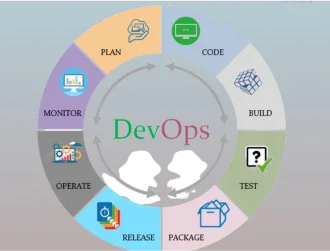
LogiQuad’s DevOps Consulting Services ensure that CI/CD pipelines, environment management, and deployment automation are in place before your first beta user logs in. This eliminates the painful manual deployment cycles that slow down iteration and iteration speed is the single biggest competitive advantage an early-stage SaaS start-up has.
Step 4: Mobile Is Not Optional – MVP Mobile App Development for Start-ups
One of the most common mistakes we see in B2B SaaS MVPs is treating mobile as a later-phase feature only after discovering that most of their user activity is happening on mobile.
Today, MVP mobile app development for a start-up does not require a separate native codebase anymore, and it is a cost-effective solution. Our Mobile App Development services are designed specifically for early-stage SaaS products that mainly focus on building a fast, reliable mobile experience and serve the core actions users perform most.
Recommended Mobile Approach
- React Native — ideal for start-ups already using React/Next.js for the web, enabling shared logic and faster development
- PWA (Progressive Web App) — suitable when mobile usage is lighter and native device functionality is not critical
Build Mobile Early If:
- More than 30% of expected usage will happen on mobile
- Your users are field-based or frequently away from desktops
- Real-time access, notifications, or quick interactions are core to the product experience
Our Mobile App Development services focus on building lightweight, reliable mobile experiences around the highest-frequency user actions.
For MVP mobile app development for a start-up in the Silicon Valley market, strong mobile demand is common in field service, healthcare, real estate, HR, workforce management, and fintech platforms. In these industries, mobile is not optional; it is essential from day one.
Step 5: Build the MVP – Engineering Principles That Save You from Rebuilding Later
Once the scope is locked and the stack is finalised, the build phase begins. The goal should not be perfection, but a working product that goes into the hands of paying users as quickly as possible, without creating a fragile codebase.
Here are the engineering principles we enforce on every MVP engagement:
Modular Architecture from the Start
Even an MVP should have a clean, scalable structure that can evolve without major rewrites. We typically use a layered architecture:
Controller → Service → Repository
This keeps business logic isolated, improves maintainability, and simplifies future scaling. A monolith is acceptable at the MVP stage, but a messy monolith is not.
API-First Design
Build the backend as an API from day one so web, mobile, and future integrations use the same interface.
For most MVP SaaS products, REST APIs are preferred for simplicity and faster development. GraphQL is only recommended when multiple clients require flexible data querying.
Automated Testing for Critical Flows
MVPs do not require full test coverage, but the most important workflows must be protected with automated testing. Focus on:
- Authentication flows
- Billing and subscription logic
- Core API functionality
- Primary user actions
These tests should run automatically during every deployment cycle.
Instrumentation Before Launch
Analytics and monitoring should be implemented before the first user signs up. Key tooling typically includes:
- Logs: AWS CloudWatch
- Error Monitoring: Sentry
- Product Analytics: Mixpanel or Amplitude
You cannot improve what you cannot measure.
Security & Compliance
A production-ready MVP should include foundational security from day one:
- JWT or OAuth authentication
- Password hashing with bcrypt
- HTTPS across all environments
- Role-Based Access Control (RBAC)
For regulated industries, additional readiness may include:
- SOC 2 compliance preparation
- HIPAA support for healthtech
- GDPR readiness for global users
Performance & Cost Optimization
Early-stage SaaS products should be designed for efficiency as well as scalability. Key considerations include:
- Redis caching for faster performance
- Database indexing from the beginning
- Avoiding unnecessary AWS NAT Gateway costs
- Autoscaling with ECS/Fargate for flexible infrastructure management
Our Enterprise Application Development services apply these principles even at the MVP stage, ensuring your product is scalable, secure, maintainable, and ready for future growth.
Step 6: Launch Strategy for Silicon Valley Start-ups
Launching an MVP in Silicon Valley is different from launching in a smaller market. The ecosystem is dense, the press is harder to get, and potential users are inundated with new product announcements. Your launch needs to be precise, not loud.
Focus your launch energy on a very specific segment. Pick a niche within your broader target market, ideally a segment where you have one or two champions who will advocate for you internally, and go deep rather than wide. A start-up that owns a small segment owns a defensible position. A start-up that tries to appeal to everyone owns nothing.
Practical Launch Tactics for SaaS MVP Development for Start-up in Silicon Valley
- Direct outreach to your original interview pool and early beta users
- Product Hunt and Hacker News for developer-focused SaaS products
- Founder-led LinkedIn content for B2B visibility and credibility
- Silicon Valley start-up communities, events, and industry-specific networks
- Partnerships and integrations with complementary SaaS tools
Technical Rollout Best Practices
To reduce launch risk and improve stability, implement:
- Feature flags for controlled feature releases
- Staging environments to test production-like deployments safely
- Gradual rollouts starting with beta users before wider public access
This approach allows faster iteration, safer deployments, and better user feedback during the critical early growth phase.
Step 7: Measure, Iterate, and Find Product-Market Fit
Launching the MVP is not the finish line. It is the starting pistol for the most important phase of your company: the search for product-market fit.
Product-market fit is not a feeling. It is a measurable state. The most useful proxy metric is retention. If users come back week after week without being prompted, you are getting close. If you are sending re-engagement emails to 80 percent of your user base, you are not there yet.
Metrics to track in the first 90 days post-launch:
Key Metrics to Track in the First 90 Days
- Activation Rate: Percentage of users completing the core action after signup
- Week 1 & Week 4 Retention: How many activated users continue using the product
- Net Promoter Score (NPS): Measures user satisfaction and referral potential
- Support Volume by Category: Repeated issues often indicate UX or workflow problems
- Trial-to-Paid Conversion Rate: The clearest indicator of product value and monetization potential
Technical Analytics Stack
To track product-market fit effectively, implement:
- Mixpanel or Amplitude for product analytics
- Segment for event tracking and data routing
- HubSpot or Salesforce for CRM and pipeline visibility
- Sentry and CloudWatch for monitoring errors and system health
For SaaS start-ups using Salesforce for CRM and pipeline management, our Salesforce Consulting Services can help you instrument your go-to-market motion from the early days so that your sales and product data live in one place when you scale.
Why LogiQuad for SaaS MVP Development in Silicon Valley?
LogiQuad is a full-service technology company with deep expertise in building SaaS products for startups and growth-stage companies. Our team combines product thinking, engineering execution, and go-to-market awareness which means we do not just build what you ask for. We help you figure out what to build.
Our service portfolio is purpose-built for SaaS start-ups:
- Artificial Intelligence and Machine Learning – AI-native capabilities, automation, semantic search, and intelligent workflows
- Enterprise Application Development – scalable SaaS architecture built to enterprise standards
- Mobile App Development – high-performance cross-platform mobile experiences that do not compromise on quality
- Cloud Consulting Services – Cloud-native infrastructure that scales with your user base
- DevOps Consulting Services – CI/CD automation, deployment pipelines, and faster engineering velocity
- Salesforce Consulting Services – for CRM and sales infrastructure built for growth
Whether you need AI MVP development for start-ups, a focused MVP mobile app development for start-up, or complete end-to-end SaaS MVP Development for start-up in Silicon Valley, LogiQuad provides the technical expertise, scalable architecture, and execution process required to launch and grow successfully.
Frequently Asked Questions
How long does SaaS MVP Development typically take for a start-up?
Most focused MVPs with a clearly defined scope take between 8 and 14 weeks from kick-off to first user. The timeline depends on the complexity of the core feature, third-party integrations, and whether mobile is in scope. Start-ups that come to us with clearly validated problem statements and a locked feature scope move the fastest.
How much does SaaS MVP Development cost for a startup in Silicon Valley?
Costs vary based on scope, depending on complexity, integrations, and whether AI or mobile components are included. We offer fixed-scope engagements for teams with a clear spec, and discovery-led engagements for founders who need help scoping before building.
What is AI MVP development for start-ups, and does my product need it?
AI MVP development for start-ups refers to building an MVP where AI capabilities such as natural language processing, predictive analytics, or workflow automation are core to the product’s value proposition. Not every start-up needs AI in the MVP. But if your product involves large volumes of unstructured data, repetitive decision-making, or personalization at scale, AI in the MVP will give you a significant competitive advantage from the start.
Can LogiQuad help us after the MVP launches?
Yes. Many of our clients continue working with LogiQuad after launch for iterative development, performance optimization, and scaling. We are structured to support start-ups through multiple growth phases from pre-seed MVP through Series. A product expansion, and our team becomes deeply familiar with your codebase, your users, and your business context over time.
What tech stack do you recommend for MVP SaaS?
Our recommended MVP SaaS stack focuses on speed, scalability, and maintainability:
- Frontend: Next.js (React)
- Backend: Node.js (NestJS)
- Database: PostgreSQL (AWS RDS)
- Caching: Redis
- Storage: AWS S3
- Hosting: AWS ECS (Fargate)
- CI/CD: GitHub Actions
This stack enables rapid iteration, strong developer productivity, and cloud-native scalability from day one.
How do you control cloud costs during MVP development?
We design MVP infrastructure to minimize unnecessary AWS spending while maintaining reliability and scalability. Common cost-control strategies include:
- Using managed services only where necessary
- Avoiding excessive NAT Gateway usage
- Implementing Redis caching to reduce database load
- Autoscaling ECS services instead of overprovisioning infrastructure
- Using S3 lifecycle policies for storage optimization
- Monitoring cloud usage through AWS CloudWatch and billing alerts
The goal is to build infrastructure that scales efficiently without creating runaway cloud costs during early growth.
Conclusion
Building a SaaS startup is hard. Building one in Silicon Valley where expectations are high, investors are discerning, and competition is relentless is harder. But the founders who get it right follow a repeatable process: validate before building, build less than they think they need, launch to a specific segment, and iterate faster than anyone else.
If you are ready to start your SaaS MVP Development for startup in Silicon Valley, or if you want to explore how AI MVP development for startups or MVP mobile app development for startup fits into your product roadmap, LogiQuad is here to help.