Quick Answer: Enterprise buyers generally ask AI vendors about governance, compliance, safety controls, and data transparency. They help buyers judge risks before procurement. Vendors with clear answers and evidence often proceed to security reviews faster.
Security plays an important role in enterprise AI deals. Your client may like your AI product’s demo. The demo may work well, too. However, security reviews can stall procurement.
An AI vendor should be prepared with the security questions enterprise buyers ask before closing the deal. Fortunately, it is easy to predict these questions.
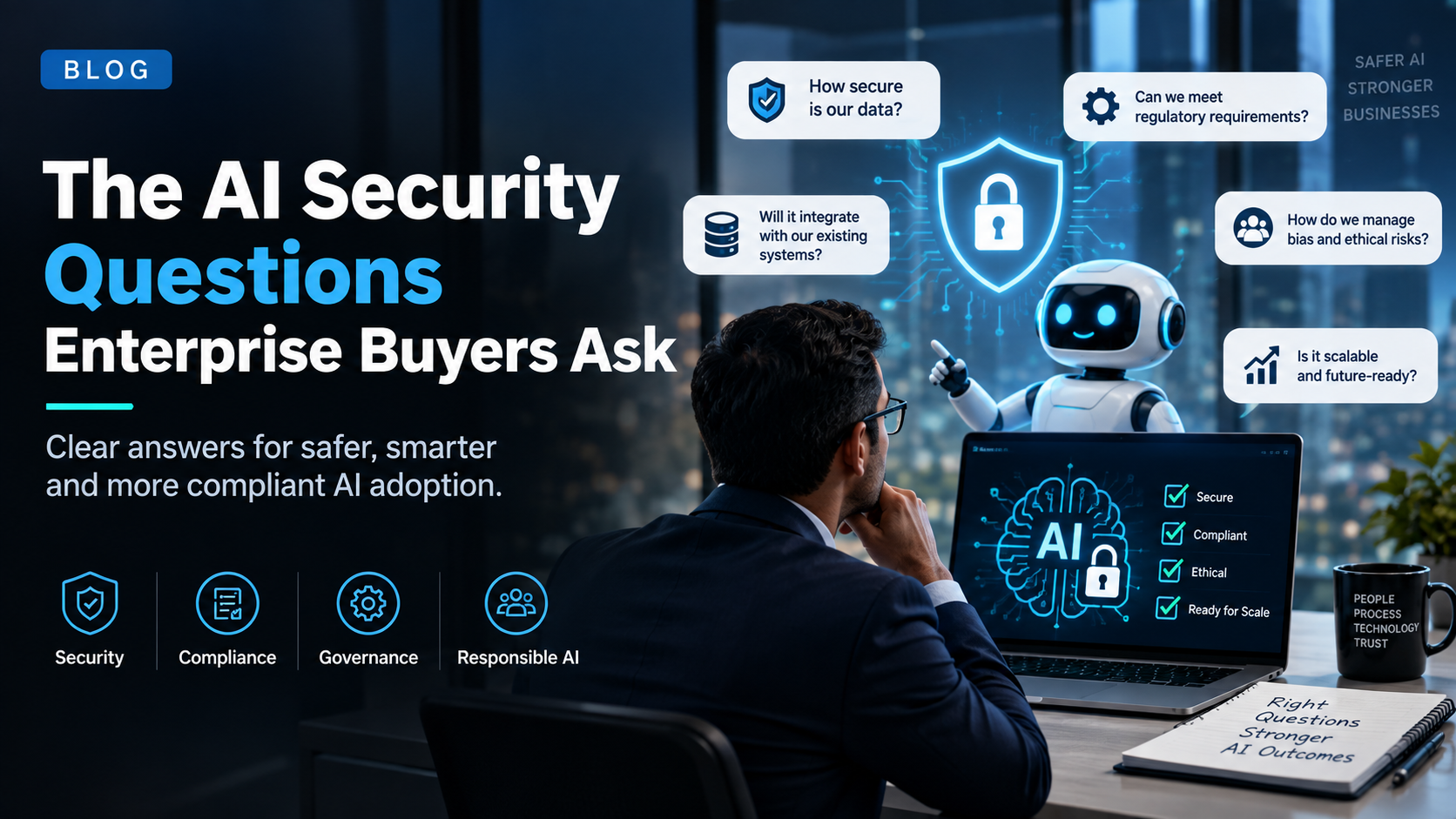
While the exact questions are bound to differ based on the projects and clients involved, we can group them into three major categories:
- Governance
- AI safety
- Data transparency
This guide explores these three areas, the AI security questions buyers commonly ask, and what they expect as answers.
Governance And Compliance
Your AI project’s governance and compliance framework helps organizations manage risks. They give them the assurance of applicable guardrails, regulations, and standards you follow.
Many buyers ask about the NIST AI Risk Management Framework. It is a US framework that helps enterprises identify and manage AI risks.
They may also ask about your ISO 42001 compliance. It is an internationally recognized standard for managing AI systems.
SOC Type II is another important certification buyers may be interested in. It is an audit that tests whether your security controls work over time.
Here are the kinds of AI security questions you can expect in this segment:
- Who owns AI security decisions?
- Do you use the NIST AI Risk Management Framework?
- Are you working toward ISO 42001?
- How do you manage AI risks?
- How do you review changes made to your AI model?
The best way to answer these questions is through evidence. Show buyers risk reviews, policies, control documents, certifications, audit reports, and clear ownership of AI security tasks.
AI Safety Controls
These questions deal with the technical safeguards that reduce harmful or unwanted AI behavior.
AI enterprise buyers want to know how your AI system works when it is attacked. They often want proof that you have tested your system’s defenses for assurance.
Here are the AI security questions you can expect in this section:
- Can attackers hide instructions inside text and make your AI product ignore its rules?
- Can your system stop private customer or enterprise data from appearing in its responses?
- How does your system detect answers that seem correct but are false?
- Can the system identify attempts made to bypass its safety rules?
Along with the description of your controls, buyers would expect testing records, monitoring methods, security procedures, and written evidence.
It is best to prepare a quick summary explaining what you have tested, which risks are covered, and how you addressed the findings.
Data Transparency
These are the trust questions that can make or break an enterprise AI deal. Buyers need clear information about how your AI system works, where its data comes from, who handles it, and how it is handled.
In most cases, by this stage, a buyer has understood and liked the product. They are now looking to trust it.
Here are the most common questions you can expect in this segment:
- What your system’s data model?
- What data did you use to train your model?
- Do you have the rights to use that training data?
- Which third parties have access to customer data?
- Where is the data processed?
- Which subprocessors support your AI system?
Focus on these while preparing your answers:
- Model Provenance Documentation: This explains where your AI model came from and how it entered the system.
- Training Data Rights And Transparency: Here, buyers see that you have a valid basis to use the data involved.
- AI Subprocessor Transparency: This informs buyers about the third parties that may access and process data as part of your AI service.
The answers you give will add to the buyer’s procurement risk assessment. Along with superior technology, AI vendors need well-maintained records that help buyers compare vendors before making a final decision.
Here is a quick strategic tip.
Maintain a live “trust packet” for enterprise buyers. Fill it with model provenance, subprocessor list, data rights information, security certifications, and key AI policies. Update the packet when your AI stack changes. This will make your upcoming vendor review much faster.
The Final Word: AI Security Questions Are Your Sales Advantage
When it comes to enterprise AI products, having a superior product is never enough. Security is equally important to turn your demo into a deal.
Enterprise buyers always look for AI systems with sound controls. They also want clear answers about data, models, and third parties.
LogiQuad offers custom AI development services to clients globally, designed for enterprise environments. If you are preparing an AI project for enterprise buyers, we can help you build the technology and prepare for AI security questions.